Sunday by Sunday they sit at consoles, largely hidden from view, often unacknowledged and poorly rewarded, often playing with great skill and dexterity, dedicated to their music and to service from the organ stool. Here is a small tribute to four such who are each associated with St. Peter’s.
Thomas Elliston
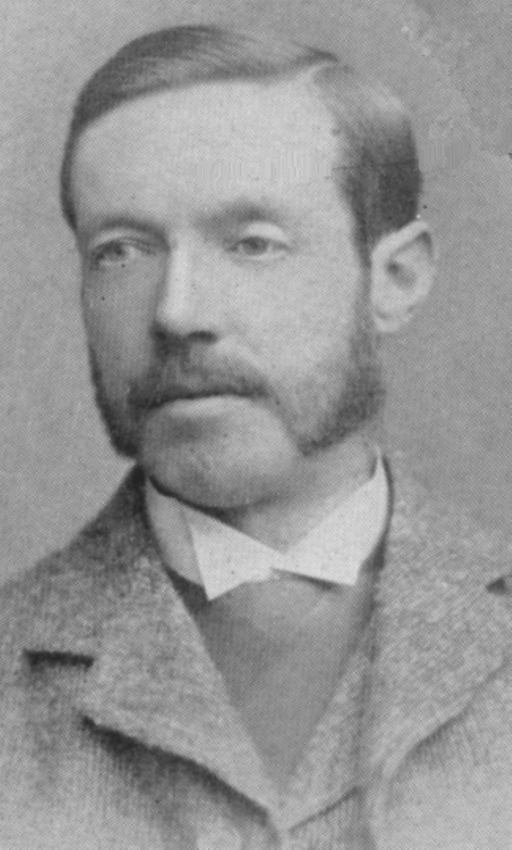
Surely the most forgotten local hero of the organ world must be Thomas Elliston. Considerable hero he was as well. He lived at Siam House, Sudbury, but his vast researches and knowledge of organs reached out over the world as his book, “Organs and Tuning; a Practical Handbook for Organists: being a treatise on the construction, mechanism, tuning and care of the instrument” for many years remained the standard reference work on the subject. The first edition was dated 1894.
Further editions, each of which added new material until the additions were greater than the original, followed up to 1924 – truly a lifetime’s work. Elliston was also a major contributor to Grove’s Dictionary of Music and Musicians.
Thomas Elliston designed the organ, sadly now disposed of, at the Baptist Church in Sudbury and was a consultant on many other organ designs. He was responsible at St. Peter’s, in 1890, for turning the Henry Jones organ of 1866 through 90 degrees, from its west facing position to a south facing position. At the same time several tonal changes were also made and the lengthy backfall action to the Swell was improved and a Tremulant was added. By 1907 Elliston’s opinion was that the cost of renovating this instrument was prohibitive. He then joined Mr. E.E. Vinnicombe and Dr. W. Inglis Mason to draw up a specification for the new organ.
Writing about the resulting magnificent Lewis and Co. organ in St. Peter’s, Sudbury, Elliston says, “The organ …. is a very large one for the size of the building. Forty speaking stops for a church seating 700 persons! This organ is a fine example of pure musical tone, the power of each stop having been purposely subdued or kept down, on account of the number of stops. The tone is so refined and musical that even in the full power there is no trace of roughness or noise. It is all music. Having two three inch swell-boxes, and thirteen couplers, the effects to be obtained are remarkable.”
Harold St George Wiffen

Harold was born in Sudbury, 22nd April 1906. He was educated at the Boys Grammar School where E. E. Vinnicombe was teaching. His mother tragically died after a car accident and he was brought up by his father. He took organ lessons at St. Peter’s with E. E. Vinnicombe and Cecil Hart.
Mr. Wiffen is chiefly associated and fondly remembered at Christ Church, formerly the Trinity Congregational Church. This building is currently
called The Hive. At the time of writing the organ still survives. He first played on the superb Conacher organ there on 11th November 1928 when he was employed at a salary of £1 a month. Harold’s wife, Phyllis, was a member of the choir and they were married at the church in 1933. Phyllis was a well known local soloist, performing in oratorios and frequently as soloist in Harold’s recitals.
In 1946 Harold applied for the post of organist at St. Peter’s. He was appointed in November at a salary of £40 per annum and played his first organ recital later in the month. A poignant letter from his predecessor reads: “Dear Mr. Wiffen, just a line to thank you for your kindness in giving a recital towards the Testimonial Fund and to wish you every success in your new work. I enclose keys of Church and Organ. With kind regard, Yours Sincerely, Ed Ellis Vinnicombe. 6th December 1946.” Sadly Mr. Wiffen’s stay at St. Peter’s was not altogether happy and he resigned in April, 1948. Eight days later he returned to his former post at Trinity Congregational Church.
During his remaining years of unstinting service there he saw the amalgamation with the Friars Street Great Chapel and for a time played the organ at both. He retired as the regular organist at Christ Church, as it had become by then, in October 1979. In a moving tribute Rev. John T. Lyman wrote, “He has a very real awareness of the glory of God and has been deeply committed to make his organ playing really lead us to worship God in the musical part of our Services, and his skill at the organ was evident. Even in the pre-service and post-service voluntaries, when we all chatter as though we had not seen one another for years, Harold Wiffen tried hard to pull our thoughts to the contemplation of things eternal through his choice of music and his playing.
He never played a piece just because it was nice to listen to, it had to be appropriate to worshipping God and it had to be theologically fit. He was careful not to be “highbrow” and always played to our ear rather than over our heads, but he would not have slipshod music either…….I might add that I hope he will not miss his beloved organ too much for I know he found relaxation among those keys and pedals.”
On a lighter note Harold recalled, after some work in the church had disturbed some dust, causing the organ to cipher during the hymn “This is the day of light”. “It carried on until we got to the line, ‘Bid Thou the blast of discord cease and noise of strife be still’. And then, all of a sudden, it stopped.”
After his retirement Harold played at many services far and wide, particularly at St. Gregory’s and All Saints. His style of organ playing is best described by a member of the congregation at All Saints where he was deputising aged 87. “He played it like a young man.” Those who heard him remarked on the expression and feeling in his playing. He used many stop changes, particularly to underline the words of the hymns. He was also renowned for his very loud final verses to hymns. A great favourite with him was the Suite Gothique by Boellman. He played it in full in many organ recitals and always used the Minuet as his ‘going away’ voluntary before he went on holidays. His favourite hymn was “Thine be the Glory”.
During his working life Harold was a solicitor’s clerk, then Clerk to the County Court in Thetford and then at the National Insurance Offices in Weaver’s Lane. Even when he retired at 60 he took a part-time job as a solicitor’s clerk.
In mid October 1998 Harold played for his last service (morning worship) at Christ Church. At the end of the same month he went into a nursing home after a fall at home. His life came to an end on 3rd January, 2001. He was a very quiet man, a private man, he did not say two words where one would suffice. His dry sense of humour underlined this trait. His loves were his family, the organ and church music and his garden. He loved to listen to music and did so regularly and to a pattern. He always dressed smartly in a collar and a tie and had a full head of bushy hair that went grey in later life. He made meticulous notes about the music he used to adorn the service, keeping a card index of what he played each week so that repetition was not frequent. He had an extensive repertoire of music on the organ and composed his own music as well. He also ran a Concert Party called ”The Patchwork Players” for which he wrote all the music and sketches. Some of these still exist.
Harold bemoaned the state into which St. Peter’s organ was allowed to fall by the 1970s but rejoiced, “The Church has since been taken over by a local organisation and is used for Concerts and other functions, and a great deal of work has been done on the organ, which now sounds as good as ever.”
Clare Deeks
Clare Deeks was named after the spot where his parents met and fell in love. His mother was a music teacher and he had his first lessons from her. His grandfather was an organist. He began his organ lessons with Bernard Hurst, then organist at Long Melford. Clare was yet another pupil at Sudbury Grammar School. After the war, during which he served with the Royal Army Supply Corps, he went for organ lesson at the Cathedral in Bury St. Edmunds. He gained the diploma of A.T.C.L. and trained further in London to become a qualified piano tuner.
Mr. Deeks did sterling work as organist and choirmaster at St. Peter’s on a salary of £35 p.a. between 1948 and the late 60s. At St. Peter’s he ran a choir of 36 mixed voices. The choir, organists and clergy all did duty at both St. Peter’s and St. Gregory’s during the late 50s and 60s. Mr. Deeks loved the organ in St. Peter’s. His widow told me that “he adored playing it and spent many hours doing so. He put his whole heart and soul into it.”
He greatly revered and admired E.E. Vinnicombe and played at his Memorial Service in 1956. Mr. Deeks was always a busy man. He owned and ran a Hardware and General Store at the lower end of the Market Hill. He also ran a music shop in King’s Hill. From this shop he operated a piano tuning business and also tuned organs in the local villages. He is remembered as a shortish and rather plump man, always engaged with something.
Clare Deeks loved playing organs. Wherever he travelled he would play organs if he got the chance. He was proud to know David Willcocks, then Director of Music at King’s College Cambridge. His musical repertoire ranged over works by Rheinberger, Bach, Mendelssohn, Purcell, Handel, George Thalben Ball and, once again, Boellman’s Suite Gothique. His widow most remembers his lively playing of Trumpet Voluntary.
George Howard
George Howard also took his organ lessons at the Cathedral in Bury St. Edmunds. He played at All Saints, Sudbury before moving to St. Peter & St. Gregory. His daughter, Georgina, inherited his musical skill, playing both the piano and clarinet and, at times, the organ. George worked at St Gregory’s and St Peter’s with Clare Deeks. They had a fine choir, the choristers coming largely from North Street School. When St. Peter’s closed for worship in 1971, the choir sadly slowly faded away. Songs of Praise, or Sunday Half-hour as it was then called, came from St. Gregory’s church on 21st March, 1978. Still remembered by many is a previous broadcast of Sunday Half-hour from St. Peter’s.
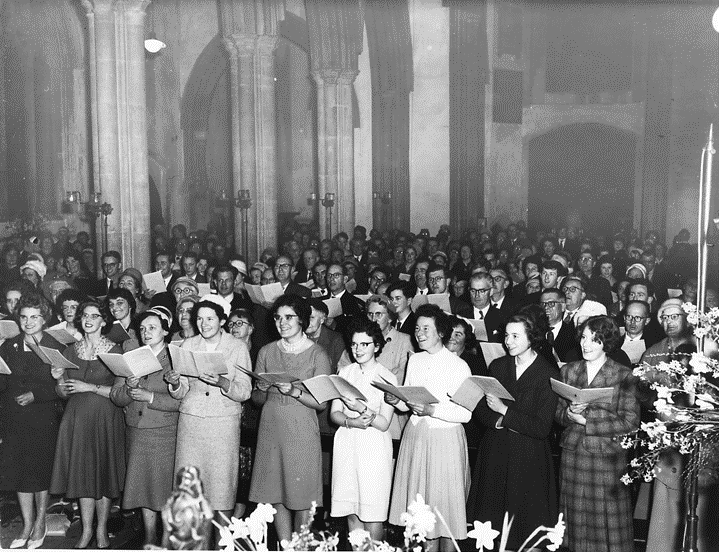
Mr. Howard was much sought after as a deputy and played in many churches, particularly when sharing duties with Mr. Deeks. He was justly proud of a record of service under Canon Barton, Rev. Peter Hollis and Rev. Derek Stiff. At times, in his enthusiasm, he was known to cycle out to the Belchamps and Ovington to play there. At other times after Morning Service he would cycle out to Little Cornard to play for afternoon evensong, returning later for evensong at St. Gregory’s. He, like so many Sudbury musicians, had a great respect for the “Vinnicombe” musical reputation.
George spent his working life in the office at Clover’s Mill, now the Mill Hotel. In his youth he ran the Elwood Trio (he named his house Elwood). They played for musical productions, given by Sudbury Dramatic Society, at the Victoria Hall.
George Howard suffered for ten years fighting Leukemia before his death. During most of that time his dedication led him to play at St. Gregory’s.
Roger Green
January 2024
 The Friends of St Peter's